How it works
Most AI systems
process requests.
Engram Graph develops understanding.
Every interaction is not an isolated event. It contributes to a system that accumulates context, refines meaning, and improves over time — without being re-prompted, re-trained, or manually updated.
Not single-moment intelligence
It operates across time, not just inside one prompt.
Not one fixed mode of thought
It adapts its depth of reasoning to what the request actually requires.
Not a static system
Every useful interaction contributes to a deeper, more specific structure of understanding.
A different model of intelligence
Three modes of operation.
One evolving system.
Before answering, the system interprets the request — evaluating what it needs, how much context is relevant, and how much reasoning is required. Response depth is matched to what the question actually demands.
Fast when speed is enough
For direct queries, the system responds instantly — no unnecessary processing, no theatrical delay. A clear answer from retained context.
Situated when context matters
When a request depends on history, connected data, or prior interactions, the response is built from accumulated understanding — not reconstructed from scratch.
Slower when depth is required
For complex requests, the system evaluates structure, relationships, and implications — producing a reasoned, traceable answer rather than a surface-level reply.
Context builds over time
Not a log.
Not a history.
A growing system of understanding.
Every interaction contributes to a structure that connects related information, reorganises itself, and refines what matters. The result is not simply more data — it is more specific intelligence.
Connections strengthen
Related information stays related, so insight does not have to be rebuilt from scratch every time it’s needed.
Meaning sharpens
The system becomes more aligned to your environment, your priorities, and the patterns that actually recur.
Usefulness compounds
The more it is used, the more specific and relevant it becomes. There is no ceiling on how well it can know your world.
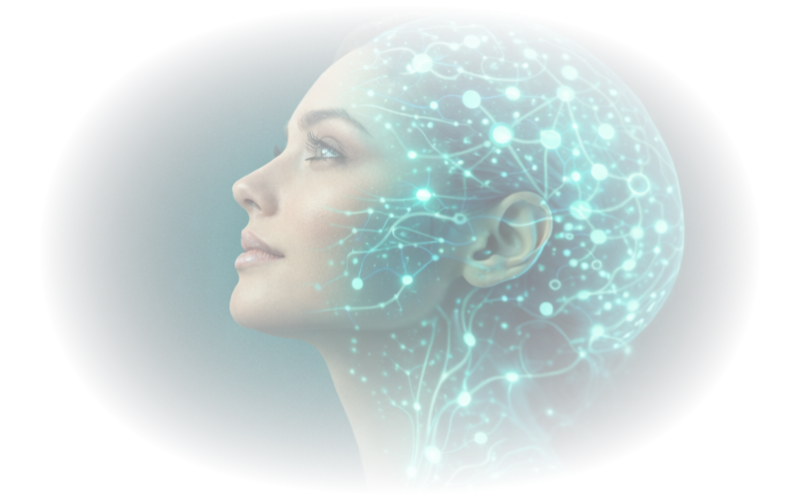
The intelligence loop
Interpret.
Respond.
Restructure.
This is where the system changes. Nothing useful is simply discarded. New information is integrated, relationships are adjusted, and important patterns are reinforced — automatically, through use.
01 — Interpretation
The system evaluates the request, its intent, and the surrounding context before deciding how to proceed. Not just pattern-matching — situating the question inside what it already knows.
02 — Response
The output is aligned to the level of complexity, the available context, and the outcome required. Depth is never arbitrary.
03 — Restructuring
New information is integrated, useful patterns are reinforced, and the overall structure of understanding is re-evaluated. This is the cycle that makes the system compound.

What this means in practice
Over time, the system becomes
more aligned, more aware,
and more valuable.
Not because it was configured once and left. Because it has retained more of what matters, refined more of what’s relevant, and built understanding that is genuinely specific to your environment.
This is not a static system. It builds. It adapts. And over time, it becomes harder to replace — because what it knows is no longer generic. It is yours.

Also on Kickstarter
Want to experience this personally?
We're opening access through Kickstarter — not as a product launch, but as the formation of a founding community. Be part of what gets built from the start.
View on Kickstarter